You pick up a t-shirt that says “eco-friendly.” A phone that promises “sustainable materials.” Then the questions start. Eco-friendly compared to what? Which materials, from where? Sustainable according to whom? As consumers become more conscious about the impact of their purchases, product transparency is becoming an essential part of making informed, responsible choices.
For most products, there is no way to answer those questions at the shelf. The label tells you what the brand wants you to know, not what you need to know. That gap is why product transparency has become one of the defining consumer issues of this decade. It starts with a problem every conscious shopper recognises, and we are going to talk about all of that today.
The Trust Problem Behind Every “Green” Label
Conscious consumers want to buy better. The problem is that “better” has been almost impossible to verify.
Vague environmental claims trained a generation of shoppers to be sceptics. When every product calls itself sustainable, the word stops meaning anything, and it punishes brands doing genuine work, because their honest claims drown in a sea of unverifiable ones. That is the real damage of greenwashing: it makes it harder for anyone to choose well.
The result is a paradox: demand for transparent product information has never been higher, yet trust in product claims has rarely been lower. If you have ever stood in a store googling a certification logo, you have lived this. Learning how to know if a brand is sustainable has quietly become a skill in itself.
What “Clearer Information” Actually Means
Product transparency is not one piece of information. It is a chain of them, covering a product’s whole life. Five layers matter most.

Materials
What is the product actually made of? Recycled content, virgin plastics, organic fibres, hazardous substances, and composition determine most of a product’s footprint, how long it lasts, and whether it can be recycled at all. That is why material quality often matters more than product trends.
Sourcing
Where did the materials come from, and under what conditions? Two identical-looking products can hide wildly different supply chains, one traceable and fairly produced, the other opaque. Jewellery shows how much transparent gold sourcing matters, but the same applies to cotton, cocoa, timber, and the minerals in your electronics.
Repairability
Can it be fixed, and will spare parts exist? A product designed for repair can live two or three times longer than one designed for replacement. Repairability information directly changes what your money buys: a purchase or a subscription to replacements.
Reuse
Does the product have a second life? Resale and refurbishment depend on verifying what an item is and what it is made of; without reliable data, second-hand markets run on guesswork.
Recycling
Can materials be recovered at the end of life? Mixed materials and undisclosed additives are why so much “recyclable” waste never gets recycled. Most of the problem hides in what’s really inside packaging waste, long before anything reaches your bin.
None of these layers fit on a hangtag. That is the structural problem transparency has always faced, and the one that digital tools are now solving.
Transparency Is Becoming Law
Product transparency used to be voluntary. In the European Union, that era is ending, and because EU rules shape global standards, the shift matters everywhere.
First, vague green claims are being outlawed. Under Directive (EU) 2024/825 on empowering consumers for the green transition, generic claims like “eco-friendly” or “green” will be banned unless a brand can demonstrate recognised excellent environmental performance, and product-level “climate neutral” claims based on carbon offsetting are prohibited outright.
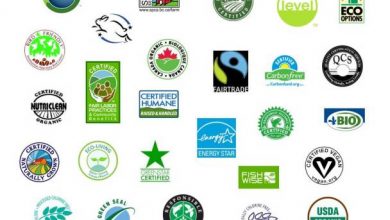
Sustainability labels must come from approved certification schemes or public authorities, and shoppers must receive durability and repairability information before buying. The burden of proof is shifting from consumer to brand, where it always belonged. Until then, independent labels remain a useful shortcut, but the label landscape is cluttered enough that knowing which sustainability certifications matter is half the battle.
Second, products are getting passports. The EU’s Ecodesign for Sustainable Products Regulation introduces the Digital Product Passport under ESPR, a structured digital record attached to a physical product, usually opened by scanning a QR code. Instead of a marketing page, the scan reveals verified information on materials, origin, environmental footprint, repair instructions, spare parts, and end-of-life handling.
Under the EU Battery Regulation, EV and industrial batteries need a digital battery passport from February 2027. Textiles, electronics, and other high-impact categories follow, with Digital Product Passport requirements defined category by category.
This is not a labelling scheme; it is a market-access rule. In the EU Digital Product Passport era, products that cannot prove what they are made of will struggle to be sold at all.
What This Means for You as a Shopper
- Compare facts, not adjectives. When two jackets both claim sustainability, verified data shows which one delivers.
- Buy for longevity. Repairability scores and spare parts availability turn “how long will this last?” into a data point, not a gamble.
- Second-hand gets safer. Verifiable product records make resale and refurbished markets more trustworthy.
- Your recycling actually works. When recyclers know exactly what is in a product, far more of it is recovered.
- Greenwashing gets expensive. Overstated claims now carry legal risk, which protects honest brands and the shoppers who choose them.
Until passports are on everything, the best habit is simple: reward specificity. A brand that names its recycled content, factories, and repair options has earned more trust than one that says “planet-friendly” in a green font. Vagueness is a choice, and increasingly, a red flag.
Transparency Powers the Circular Economy
A circular economy, in which products are used longer, repaired, resold, and finally recycled, runs on information. You cannot repair what you cannot understand, resell what you cannot verify, or recycle what you cannot identify. Product transparency is the infrastructure that makes all of it possible.
You are not just entitled to know what you are buying; the shift to a sustainable economy depends on it, and the fastest way to see where it is heading is to learn more about Digital Product Passports and what they already reveal about the things we buy.
The most powerful thing a conscious consumer can do has not changed: ask questions. What is different now is that the answers are becoming something you can check.
Sources
- Directive (EU) 2024/825 on empowering consumers for the green transition (EUR-Lex)
https://eur-lex.europa.eu/eli/dir/2024/825/oj/eng - Regulation (EU) 2024/1781 – Ecodesign for Sustainable Products Regulation (ESPR) (EUR-Lex)
https://eur-lex.europa.eu/eli/reg/2024/1781/oj/eng - Regulation (EU) 2023/1542 – EU Battery Regulation (EUR-Lex)
https://eur-lex.europa.eu/eli/reg/2023/1542/oj - European Commission – Sustainable Consumption
https://commission.europa.eu/topics/consumers/consumer-rights-and-complaints/sustainable-consumption_en - European Commission – Ecodesign for Sustainable Products Regulation
https://commission.europa.eu/energy-climate-change-environment/standards-tools-and-labels/products-labelling-rules-and-requirements/ecodesign-sustainable-products-regulation_en
Disclaimer
This article is provided for general informational and educational purposes only. While every effort has been made to present accurate information at the time of publication, sustainability regulations, certification schemes, and product transparency requirements continue to evolve. Readers are encouraged to verify product information and consult official regulatory sources where appropriate before making purchasing decisions.