Discover practical strategies for reducing toxic emissions in industrial plants through process optimisation, cleaner technologies, preventive maintenance, and sustainable manufacturing practices.
Industrial facilities remain essential to modern economies, producing everything from construction materials to food products and electronics. At the same time, manufacturing processes can release pollutants that affect air quality, worker safety, and surrounding ecosystems. Toxic emissions may include volatile organic compounds, nitrogen oxides, sulfur dioxide, particulate matter, and hazardous air pollutants, depending on the industry and production methods.
Identify Emission Sources Before Making Changes
Successful emission reduction begins with a clear assessment of where pollutants originate. Every industrial plant has unique processes, making a detailed emissions inventory an important first step.
Combustion equipment, chemical reactions, material handling systems, storage tanks, and transportation activities can all contribute to air pollution. Even small leaks from valves, pumps, or pipe connections may release significant amounts of hazardous gases over time.
Regular inspections, emissions testing, and process evaluations help operators identify priorities for improvement. Addressing the largest emission sources first often delivers the greatest environmental benefit while supporting regulatory compliance.
Improve Process Efficiency
Many emissions result from inefficient production rather than unavoidable industrial activity. Optimizing manufacturing processes can reduce waste, lower fuel consumption, and decrease pollutant generation.

Examples include improving combustion efficiency, reducing unnecessary heating cycles, optimizing production schedules, and minimizing equipment idle time. Process automation can also improve consistency by maintaining operating conditions within desired ranges. Reducing raw material waste provides additional benefits. Less wasted material means fewer emissions associated with production, transportation, and disposal.
Upgrade Pollution Control Systems
Air pollution control equipment plays a central role in reducing industrial emissions. Different technologies target different pollutants based on the characteristics of the exhaust stream. Baghouse filtration systems capture fine particulate matter before it enters the atmosphere. Electrostatic precipitators remove dust through electrically charged collection plates. Scrubbers reduce sulfur compounds, acid gases, and certain chemical contaminants by bringing exhaust gases into contact with treatment liquids.
Catalytic systems help reduce nitrogen oxide emissions through controlled chemical reactions. Activated carbon technologies can capture certain organic compounds and hazardous air pollutants before release. Selecting the appropriate control technology depends on fuel type, operating conditions, pollutant concentrations, and applicable environmental regulations.
Prevent Equipment Leaks Through Regular Maintenance
Equipment deterioration is a common source of toxic emissions. Aging seals, damaged gaskets, corroded piping, and worn valves can allow gases or vapors to escape into the surrounding environment. Preventive maintenance programs reduce these risks through scheduled inspections and timely component replacement.
Leak detection technologies, including infrared cameras and portable gas analyzers, help maintenance teams identify problems before they become major environmental concerns. Routine maintenance also improves equipment reliability, reducing unplanned shutdowns that may increase emissions during startup and recovery operations.
Expand Continuous Monitoring
Continuous emissions monitoring systems provide real-time information about pollutant levels, allowing operators to identify unexpected changes quickly.
Instead of relying exclusively on periodic testing, facilities can track performance throughout normal operations. This approach allows operators to recognize equipment problems, changing combustion conditions, or process deviations before regulatory limits are exceeded.
Collected data also supports environmental reporting, performance analysis, and long-term planning. Reviewing trends over time often reveals opportunities for additional improvements.
Improve Energy Infrastructure
Energy efficiency and emission reduction are closely connected. Modern electrical systems reduce unnecessary energy losses while supporting cleaner production processes. Facilities replacing outdated electrical infrastructure may evaluate high-efficiency motors, variable frequency drives, upgraded switchgear, and modern distribution equipment.
During capital improvement planning, organizations comparing electric transformers for sale may also consider efficiency ratings, expected service life, and compatibility with future electrification projects. Reducing energy waste lowers operating costs while decreasing emissions associated with electricity generation, particularly in regions that continue to rely on fossil fuel power plants.
Strengthen Employee Training
Technology alone cannot deliver consistent environmental performance. Employees operating industrial equipment make decisions every day that influence emissions. Training programs should cover equipment operation, emergency procedures, maintenance reporting, leak recognition, and environmental responsibilities.
Workers who recognize early warning signs of equipment problems can often prevent larger failures from developing. Clear communication between operations, maintenance, engineering, and environmental teams also supports faster responses when abnormal conditions occur.
Consider Cleaner Raw Materials and Fuels
Some emission reductions can be achieved before manufacturing even begins. Alternative raw materials with fewer contaminants may produce cleaner exhaust streams during processing.
Fuel selection also has a measurable impact. Facilities transitioning from higher-emission fuels to cleaner alternatives may reduce sulfur dioxide, particulate matter, and other pollutants.
Electrification of selected industrial processes can further decrease direct emissions where reliable electrical infrastructure is available. Every transition should include technical and economic evaluations to ensure production quality remains consistent while environmental performance improves.
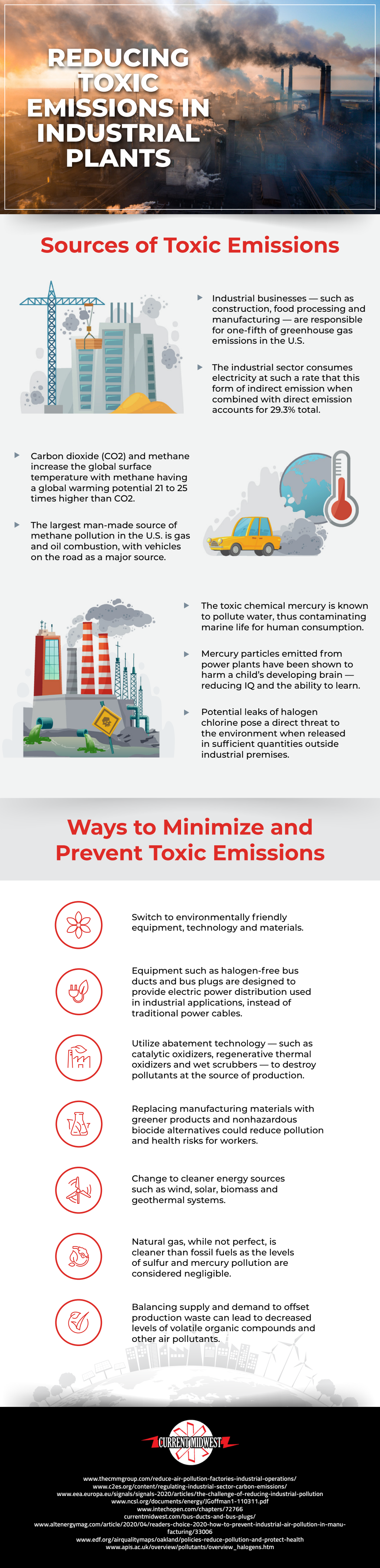
Facilities that combine process optimization, preventive maintenance, emissions monitoring, employee training, and efficient energy systems are better positioned to reduce environmental impacts while maintaining reliable production. Cleaner industrial operations support healthier communities, improve resource efficiency, and strengthen the long-term sustainability of manufacturing without compromising operational performance. Look over the infographic below for more information.
Disclaimer
This article is provided for general informational and educational purposes only. It should not be considered engineering, technical, safety, or professional maintenance advice. Maintenance practices, repair methods, equipment specifications, and regulatory requirements vary depending on the turbine manufacturer, operating environment, and applicable standards. Readers should consult qualified professionals and follow relevant industry guidelines before undertaking maintenance or operational decisions related to wind energy infrastructure.